Two names dominate any conversation about lightweight wireless competitive mice: Logitech's G PRO X Superlight and Razer's Viper Ultimate. Both launched within months of each other back in 2019, both chased the same goal — a wireless mouse light enough and fast enough to replace a wired one on a pro desk — and both are still recommended years later, now regularly discounted well below their original list prices. They're not identical tools, though. One trades features for raw minimalism; the other keeps RGB and extra buttons while still hitting a genuinely low weight. Here's how they actually compare.
Specs Compared: Weight, Sensor, and Features
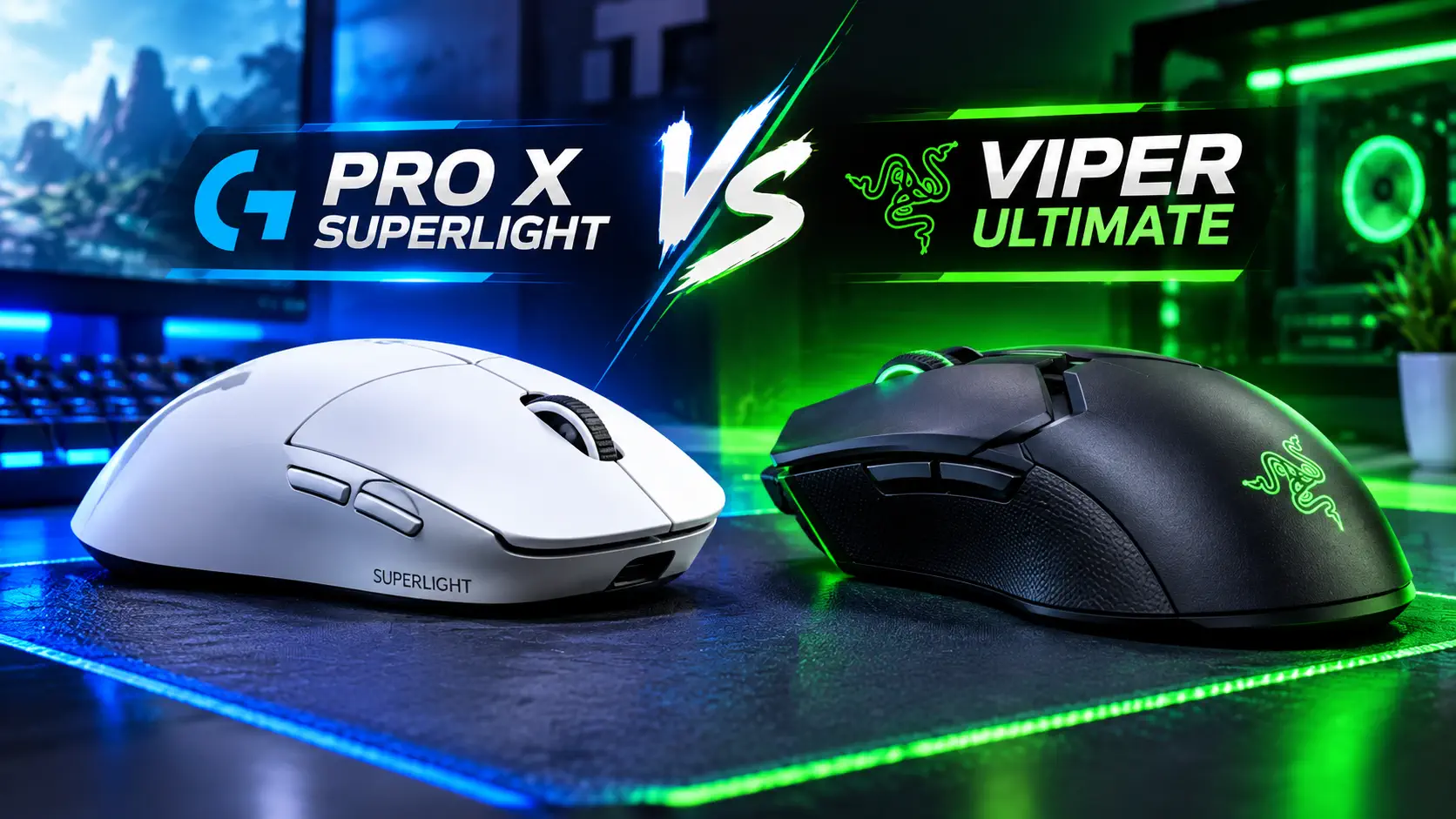
On specs, these two are closer than you'd expect. The G PRO X Superlight weighs under 63 grams (ours measured around 60g) and uses Logitech's HERO 25K sensor, tracking up to 25,600 DPI over LIGHTSPEED wireless, with up to 70 hours of battery life. It launched at $159.99 and deliberately skips onboard RGB and extra side buttons to save weight. The Viper Ultimate weighs 74 grams and uses Razer's Focus+ sensor, tracking up to 20,000 DPI over HyperSpeed wireless, also rated for up to 70 hours of battery life with lighting disabled. It launched at $150 with a charging dock included, and keeps RGB Chroma lighting plus 8 programmable buttons — features the Superlight strips out entirely.
The headline trade-off is simple: the Superlight is about 14 grams lighter and drops every non-essential feature to get there, while the Viper Ultimate is ambidextrous (the Superlight is right-hand-only), keeps RGB and more buttons, and includes a charging dock in the box. Neither sensor is a meaningful downgrade in practice — both track cleanly at the low-to-mid DPI ranges competitive players actually use, regardless of the DPI ceiling printed on the box.
The main difference between the Logitech G PRO X Superlight and the Razer Viper Ultimate is weight versus features. The Superlight weighs under 63 grams and strips out RGB lighting, extra side buttons, and left-handed support entirely to get there, aiming squarely at competitive FPS players who treat every gram as a liability. The Viper Ultimate weighs 74 grams, still light by non-competitive standards, but keeps RGB Chroma lighting, 8 programmable buttons, an ambidextrous shape usable by left-handed players, and ships with a charging dock included in the box. Both use different flagship sensors (HERO 25K versus Focus+ 20K) that track accurately well past what any human can actually perceive, so the real choice comes down to whether you want the lightest possible shell or a more full-featured mouse that's still genuinely light.
Which Sensor and Grip Actually Win in Play
In practice, the weight difference is the part you actually feel. Fourteen grams sounds small on paper, but across a multi-hour ranked session it changes how tiring wide tracking sweeps and repeated flicks feel — testers who've used both consistently reach for the Superlight first when wrist fatigue is the deciding factor. The Viper Ultimate closes that gap somewhat with its ambidextrous shape, which suits a wider range of grip styles and hand sizes than the Superlight's right-hand-only design, and its extra buttons genuinely help in games that use more than two mouse inputs. Sensor-wise, both are functionally interchangeable for competitive play — the DPI ceiling gap (25,600 versus 20,000) is irrelevant, since virtually no competitive FPS player runs anywhere near either number.
Is the Razer Viper Ultimate as good as the Logitech G PRO X Superlight in 2026? For raw tracking performance, yes — both sensors are effectively interchangeable at the DPI ranges competitive players actually use, and both wireless systems are indistinguishable from a wired connection in practice. The deciding factors are weight, shape, and features rather than sensor quality: the Superlight is lighter and built specifically for right-handed competitive players who want nothing extra, while the Viper Ultimate is heavier but ambidextrous, keeps RGB and more buttons, and includes a charging dock in the box. Left-handed players effectively have no choice between the two, since the Superlight isn't available in a mirrored version. For everyone else, it comes down to whether the lightest possible shell matters more than extra features and grip flexibility.
Which One Should You Buy?
Buy the G PRO X Superlight if you're right-handed, play competitive FPS titles where every gram matters, and don't need RGB or extra buttons — our full Superlight review covers exactly how it holds up in extended ranked play. Buy the Viper Ultimate if you're left-handed, want RGB lighting and more programmable buttons, or simply prefer an ambidextrous shape. Both mice are years past launch at this point, and both show up regularly discounted well below their original MSRPs — check our current gaming mouse deals before paying full price for either one. At sale pricing, it's hard to go wrong with either; the right pick comes down to hand preference and which features you're willing to live without.