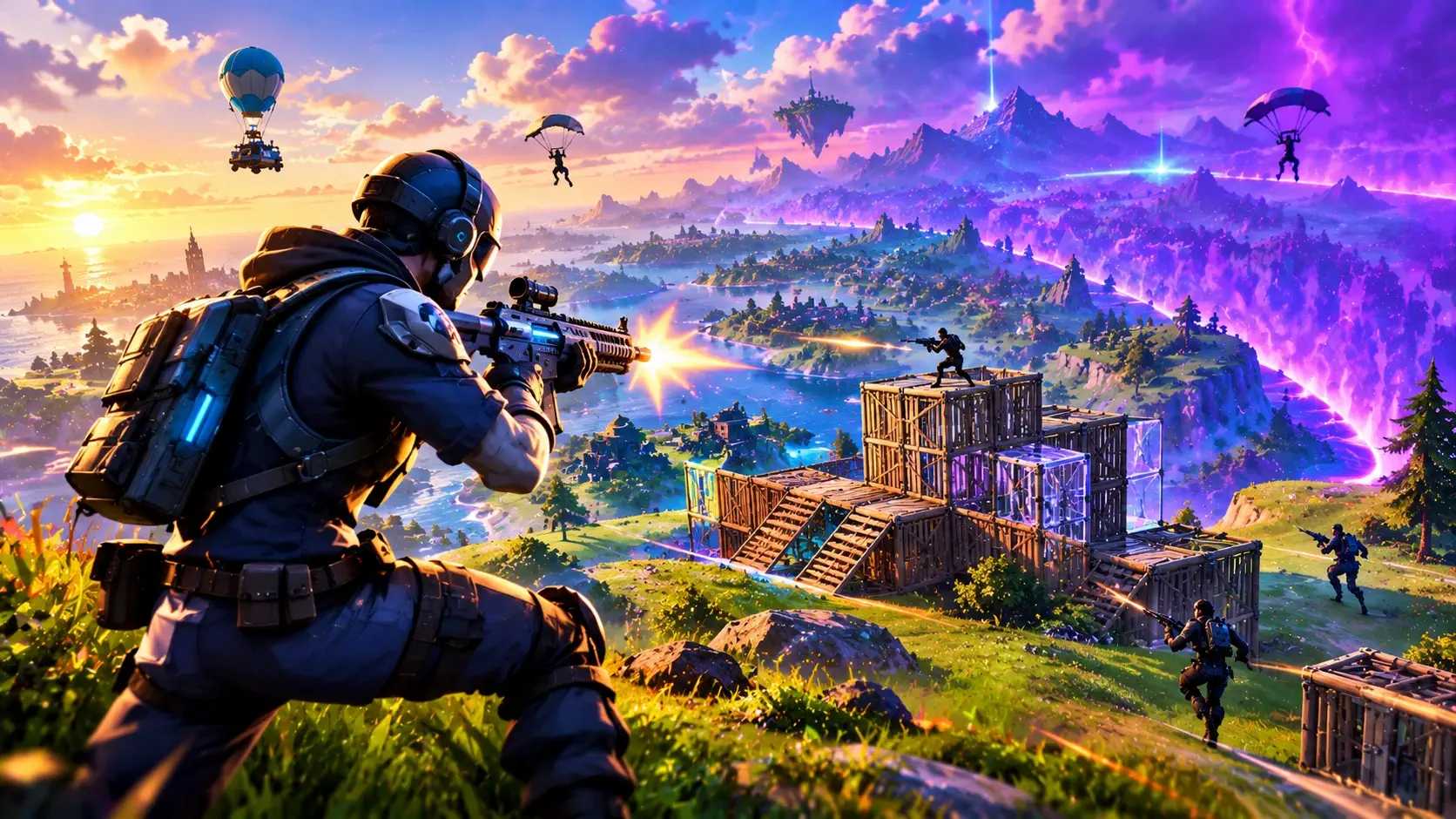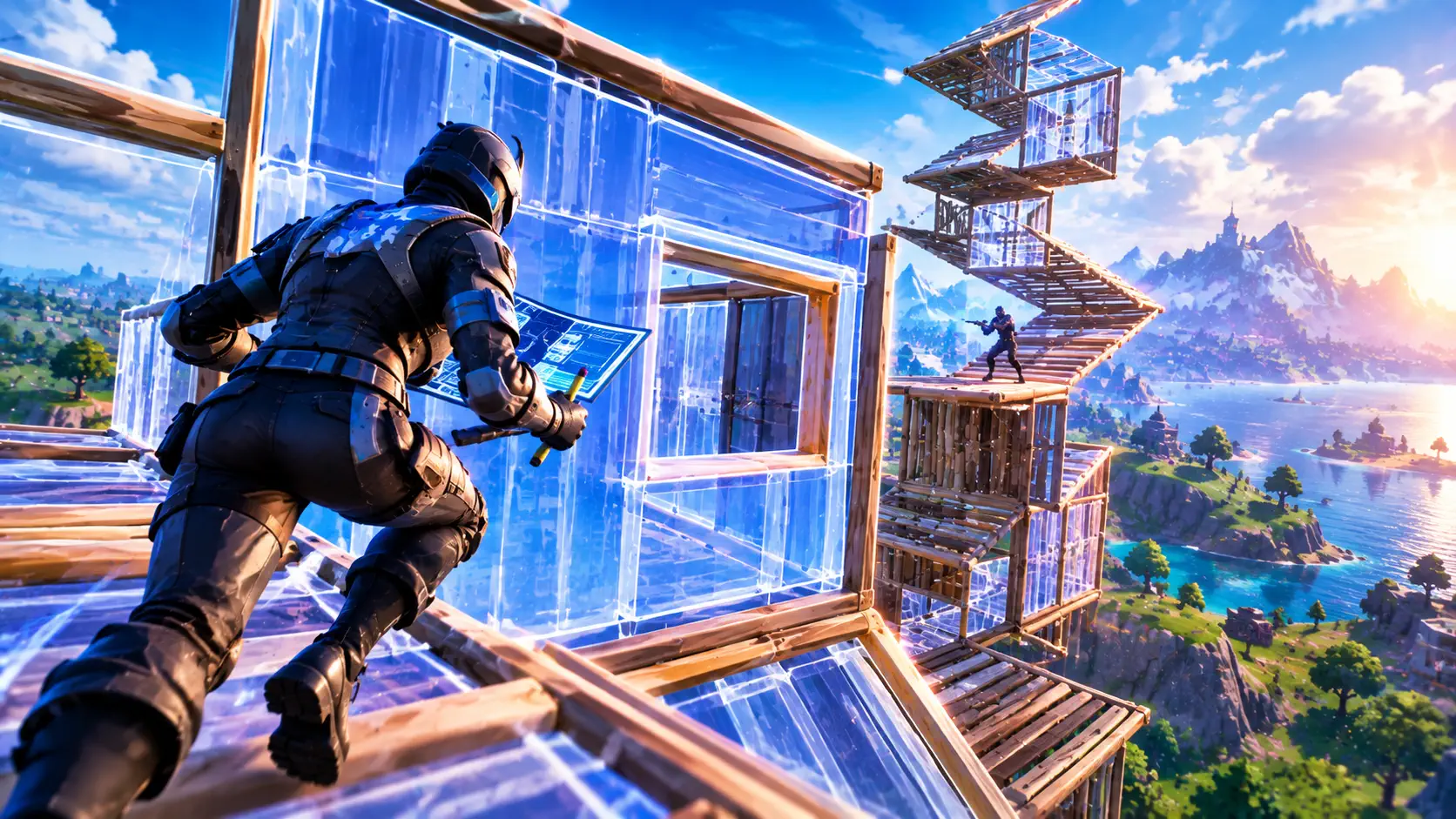
Anyone can learn Fortnite's mechanics in an afternoon. Building well — fast enough to survive a fight, controlled enough to not trap yourself — is the skill that actually separates ranks, and it's the one most new players either avoid entirely by playing Zero Build or grind badly without a clear plan. Here's how to build that skill on purpose.
Start With Piece Control, Not Speed
The instinct for most new players is to chase build speed first, mimicking the rapid-fire box fights they see in clips. That's backwards. Speed without control just means you build the wrong piece faster. Piece control — reliably placing a wall, ramp, floor, or cone exactly where you mean to, under pressure, without misplacing it into open air or the wrong angle — is the actual foundation. Practice placing all four piece types deliberately in an empty area before worrying about how fast you can do it; speed comes naturally once the muscle memory for placement is solid.
Learn the 90s Before Anything Fancier
"90s" — building a wall, then a ramp turned 90 degrees from your last position, repeated in a spiral — is the single most useful building pattern to learn first, because it does two things at once: it gains you high ground and it blocks incoming fire from below. Most other building techniques (box fighting, ramp rushes, piece control drills) are refinements built on top of a solid 90s foundation, not replacements for it. If you only have time to drill one pattern, this is it.
Editing: The Skill That Actually Wins Fights
Building gets you into position; editing is what wins the fight once you're there. An edit is a pre-planned or improvised opening cut into a placed piece — a window in a wall to peek and shoot through, or a full removal to push through a ramp. The single biggest improvement most players can make is pre-editing walls before a fight starts, rather than editing reactively once an enemy is already shooting at you. A wall with a peek-window already cut lets you fire and retreat behind full cover in the time it takes an opponent to react, while editing under fire for the first time usually means you take damage before you get a shot off.
Box Fighting Fundamentals
A box fight — trapping yourself and an opponent in a small enclosed structure at close range — comes down to three things: piece placement speed, edit speed, and target tracking, roughly in that order of importance at a beginner level. The most common beginner mistake is over-building during a box fight, adding unnecessary walls that block your own sightlines instead of committing to a clean edit-and-shoot pattern. Start with simple 1x1 box fights against a friend or in creative practice modes before trying to apply the skill in a real match, where the stakes and pressure make bad habits much harder to unlearn.
How to Actually Practice
- Use creative or practice modes deliberately, not just for warming up — dedicated building and editing practice maps let you drill specific patterns (90s, box fighting, ramp rushes) without match pressure.
- Record yourself losing fights. The moment you misplace a piece or fumble an edit under pressure is more instructive than ten clean practice reps in an empty field — watch back where builds actually break down in real fights.
- Don't skip Zero Build entirely if building isn't clicking yet. It's a legitimate, fully-supported mode, not a lesser version of the game — competitive players in both formats exist, and there's no requirement to master building if the aim-and-position gameplay is what you actually enjoy.
Bottom line
Building well is a mechanical skill like any other in a competitive game — it responds to deliberate, focused practice far better than raw playtime. Piece control before speed, 90s before advanced patterns, pre-edits before reactive ones: that order matters more than how many hours you put in. For the bigger picture on what's currently live in the game — current season, modes, and general onboarding — our Fortnite overview covers what's new this season on Windows PC.
Looking for another free game to try? Our Free-to-Play Games in 2026 guide helps you choose a genre and explains what free really costs.