Genshin Impact's combat looks simple on the surface — attack, switch character, attack again — but the depth is almost entirely in how elements interact with each other. A team that ignores elemental reactions plays noticeably worse than one built around them, even with identical character levels and gear. Here's how the system actually works and how to put together a first team that isn't fighting against itself.
How Elemental Reactions Actually Work
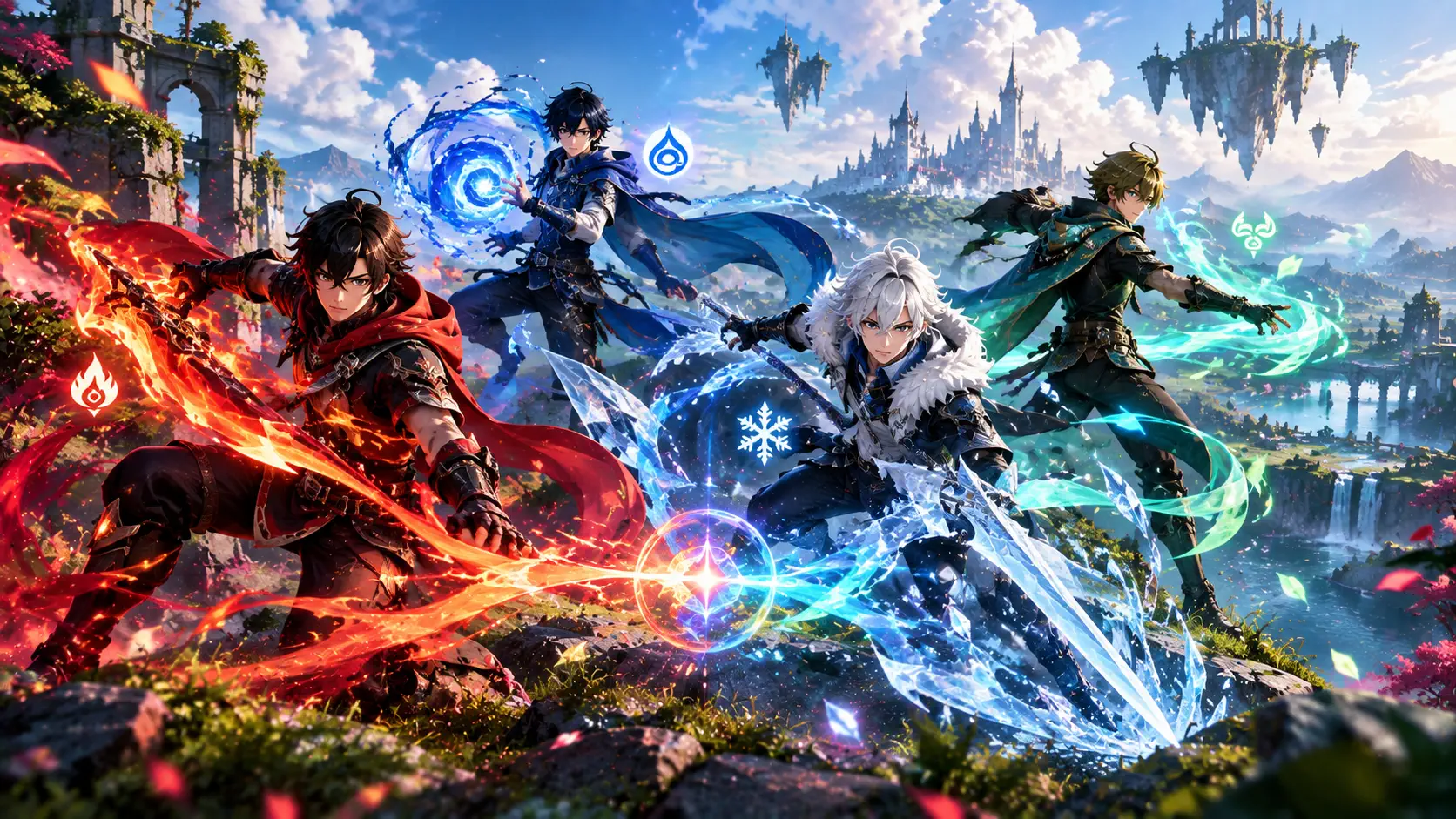
Every attack that applies an element (Pyro, Hydro, Electro, Cryo, Anemo, Geo, Dendro) leaves that element applied to an enemy for a few seconds. Hitting that same enemy with a different element while the first is still applied triggers a reaction, and different element pairings produce different effects. Vaporize (Pyro meeting Hydro, or Hydro meeting Pyro) and Melt (Pyro meeting Cryo, or Cryo meeting Pyro) both multiply damage significantly and are the two reactions worth prioritizing early, since they directly amplify your main damage dealer's hits rather than just applying a status effect. Electro-Charged (Hydro plus Electro) and Overload (Pyro plus Electro) deal their own damage and can crowd-control or launch enemies, which matters more in multi-enemy fights than single-target boss fights.
What's the practical difference between Vaporize and Melt for a beginner? Vaporize triggers between Pyro and Hydro and Melt triggers between Pyro and Cryo — both roughly double or more the triggering hit's damage, but which one fits your team depends on which of the two elements your main damage dealer already uses. A Hydro-focused main DPS pairs with a Pyro support to set up Vaporize; a Cryo-focused main DPS pairs with a Pyro support (or vice versa) for Melt. Building a team around a reaction your main character can't actually trigger is a common early mistake — check your main damage dealer's element first, then choose the reaction, not the other way around.
The Four Team Roles
A well-built Genshin team generally fills four roles, though not every team needs exactly one of each: Main DPS (your primary damage source, the character you're building most of your resources around), Sub-DPS (a second damage contributor who often also applies an element to set up a reaction for your Main DPS), Support (buffs, debuffs, or crowd control that make the rest of the team hit harder or survive better), and Healer or Shielder (keeps the team alive, especially important before you have strong gear). New players often build four characters as if they're all Main DPS, spreading resources too thin — picking one clear Main DPS and building the other three around supporting that character is far more resource-efficient.
Building Your First Team From Free Characters
You don't need gacha luck to build a genuinely functional first team. The characters given free through the story and early events are enough to clear the game's early-to-mid content comfortably: a free Pyro or Hydro character as your reaction trigger, a free Anemo character for crowd control and elemental application spread (Anemo's Swirl reaction spreads other elements to nearby enemies, which is disproportionately useful against groups), and whatever healer or shielder you've unlocked through the story so far. The specific characters matter less at this stage than understanding the roles — a mediocre character correctly slotted into a role beats a strong character used incorrectly.
What to Prioritize Early
- Level your whole team roughly evenly rather than dumping all resources into one character immediately — talent and weapon upgrades matter more than character level once you're past the early game.
- Don't over-invest in artifacts before level 40-ish. Artifact farming is the most resource-intensive part of the game's progression; early on, correctly-chosen team roles and reactions matter far more than optimized artifact stats.
- Learn enemy elemental weaknesses as you go, rather than memorizing a chart up front — certain enemy types (Hydro slimes, Cryo abyss mages, and so on) telegraph which reaction hurts them most just from their design.
Bottom line
Genshin Impact's combat rewards understanding elemental reactions far more than it rewards raw character level or gear score, especially in the early-to-mid game. Pick a Main DPS, identify which reaction actually amplifies their damage, and build the rest of the team to support that — everything else is refinement on top of that foundation. For the broader picture of what's new in the game right now, our Genshin Impact overview covers the current region and onboarding basics on Windows PC.
Looking for another free game to try? Our Free-to-Play Games in 2026 guide helps you choose a genre and explains what free really costs.